Awning Window Replacement: Repair or Replace?
A sticking crank, a sash that will not seal tight, or water showing up where it should not – these are usually the moments homeowners start thinking seriously about awning window replacement. The tricky part is that not every awning window needs to be replaced. In many cases, the right call depends on the frame condition, the hardware, the glass, and how long you want the fix to last.
When awning window replacement makes sense
Awning windows are built to vent well and shed rain when they are working properly. Because they hinge at the top and open outward, they rely on good alignment, solid hardware, and a weather-tight seal. When one of those elements fails, performance drops fast.
Replacement is often the better option when the frame is rotted, warped, or badly out of square. A new operator or hinge can help a minor issue, but it will not correct a frame that has already lost its structural integrity. If the sash does not close evenly, the lock will not engage, or water keeps working past the seals, a repair may only buy time.
Older windows can also become expensive to keep alive. Parts wear out, glass loses efficiency, and repeated service calls start adding up. At a certain point, awning window replacement is not the bigger expense – it is the cleaner long-term decision.
When a repair may be the smarter move
Homeowners are often told to replace first. That is not always necessary. If the main issue is a broken crank, worn hinge, failed screen, damaged weatherstripping, or fogged insulated glass in an otherwise sound frame, repair can make good sense.
This matters most when you want to preserve the look of the home, limit disruption, or stay within a tighter budget. A targeted repair can restore operation and improve comfort without turning a manageable issue into a full construction project.
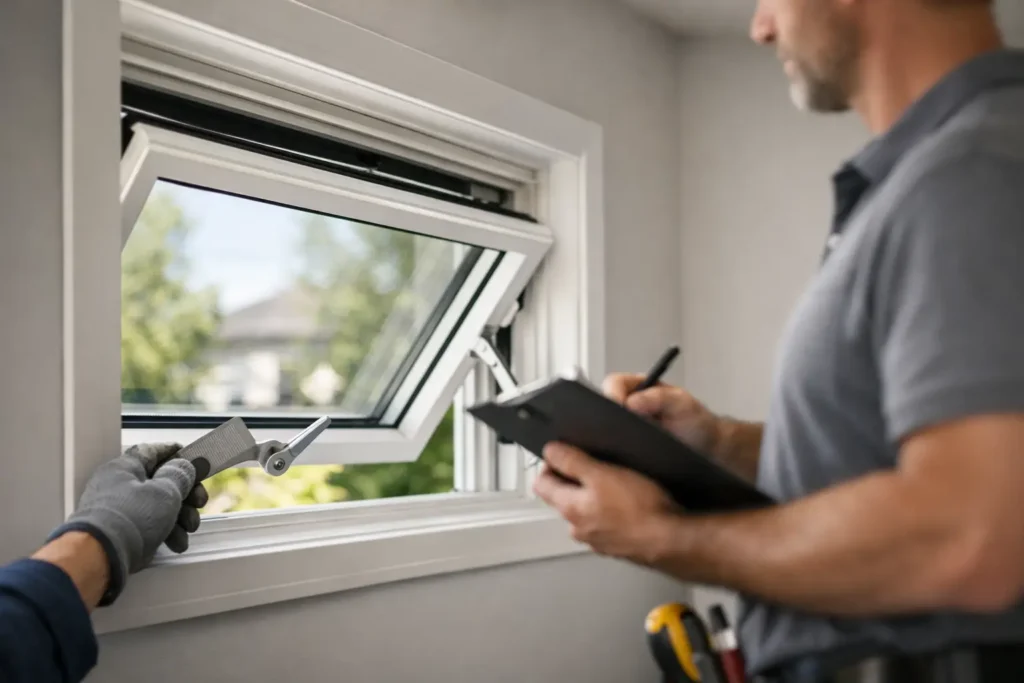
That is why the first step should always be a careful inspection. A craftsman who understands both repair and replacement can tell the difference between a window that is worth saving and one that is already past that point.
Common signs your awning window is past repair
Some symptoms are obvious. Others hide in plain sight for years.
If you feel drafts even when the window is locked, that points to a failed seal, frame movement, or a sash that no longer seats correctly. If rain intrusion keeps happening around the unit, the problem may extend beyond the sash to the frame, flashing, or surrounding trim. If the operator is stripped and the sash has sagged, replacing hardware alone may not solve the root problem.
Condensation between panes is another clue. A failed insulated glass unit does not always require a full window replacement, but if it comes with frame deterioration or multiple failing components, replacement usually makes more sense. Cracked vinyl, soft wood, corrosion, and visible separation at joints are also signs that the window may be nearing the end of its service life.
What happens during awning window replacement
A good replacement process starts with measurement and diagnosis, not guesswork. The existing opening has to be checked for squareness, water damage, and trim condition. That matters because a new window only performs as well as the opening it goes into.
In many homes, the old sash and frame are removed carefully to avoid unnecessary damage to interior finishes and exterior trim. The new unit is then installed level and plumb, insulated properly, and sealed against air and water intrusion. Hardware is adjusted so the sash opens smoothly and closes tight.
The details matter here. A window that looks fine on day one can still leak or bind later if the installation was rushed. That is one reason experienced replacement work tends to hold up better. Precision at the opening, the seal, and the trim line is what separates a short-term fix from a reliable result.
Choosing the right replacement window
Not all awning windows are equal, and the best choice depends on the property, exposure, and your goals. Some homeowners want better energy performance. Others are trying to match an existing architectural style. Commercial properties may care more about durability, maintenance, and consistent operation across multiple units.
Frame material plays a big role. Vinyl is popular for lower maintenance and solid energy performance. Aluminum can fit certain commercial or modern applications but may behave differently in terms of heat transfer. Wood interiors offer a traditional look, though they require more upkeep. The right pick depends on your priorities, not just the price tag.
Glass package matters too. Low-E coatings, insulated glass, and climate-appropriate options can improve comfort and reduce strain on heating and cooling systems. In Georgia, where heat and humidity are part of the equation, that can make a noticeable difference.
Cost depends on more than the window itself
One reason pricing for awning window replacement varies so much is that the window unit is only part of the job. Size, frame material, glass type, trim work, accessibility, and the condition of the opening all affect the final cost.
A straightforward replacement in a sound opening is different from a project that uncovers hidden rot, damaged sheathing, or trim that has to be rebuilt. Custom sizes can also increase cost, especially when trying to match older homes or specialty openings.
That is why the cheapest quote is not always the least expensive outcome. If critical prep work is skipped, you can end up paying again for water damage, air leaks, or repeated service issues. Clear scope and skilled installation usually save money over time.
Repair first, replace when it counts
For many property owners, the real question is not whether replacement is good or bad. It is whether replacement is necessary now. That answer should come from condition, performance, and value.
If the window can be restored with dependable hardware, sound glass, and a solid seal, repair may be the right call. If the frame is failing, the sash is compromised, and the opening needs correction, replacement is usually the stronger investment. The right contractor should be comfortable saying both.
That balanced approach is especially valuable when a home has multiple problem windows. Sometimes only a few units truly need replacement, while the rest can be repaired or updated. That gives homeowners more control over budget and timing without sacrificing quality.
Why craftsmanship matters with awning windows
Awning windows look simple, but they depend on exact fit and alignment. The hinge placement, operator tension, sash compression, weatherstripping, and seal at the opening all have to work together. If one detail is off, the whole unit can feel flimsy or fail to seal.
That is why this kind of work benefits from a contractor who understands more than just product catalogs. It takes hands-on experience with window mechanics, trim, glazing, and finish work to get a clean result. Companies such as Atlanta Window, Door & Glass stand out when they bring that broader repair-and-replacement knowledge to the job instead of treating every issue like a one-size-fits-all sale.
A better decision starts with the condition of the window
If your awning window is hard to open, leaks in storms, or never seems to close quite right, do not assume full replacement is your only option. At the same time, do not keep pouring money into a window that is already failing at the frame. The right path is the one that restores performance, protects the opening, and makes sense for how long you plan to stay in the property.
A good window should open easily, close tightly, and stay out of your way when the weather turns. If yours no longer does that, getting a clear professional assessment is the smartest next step.