
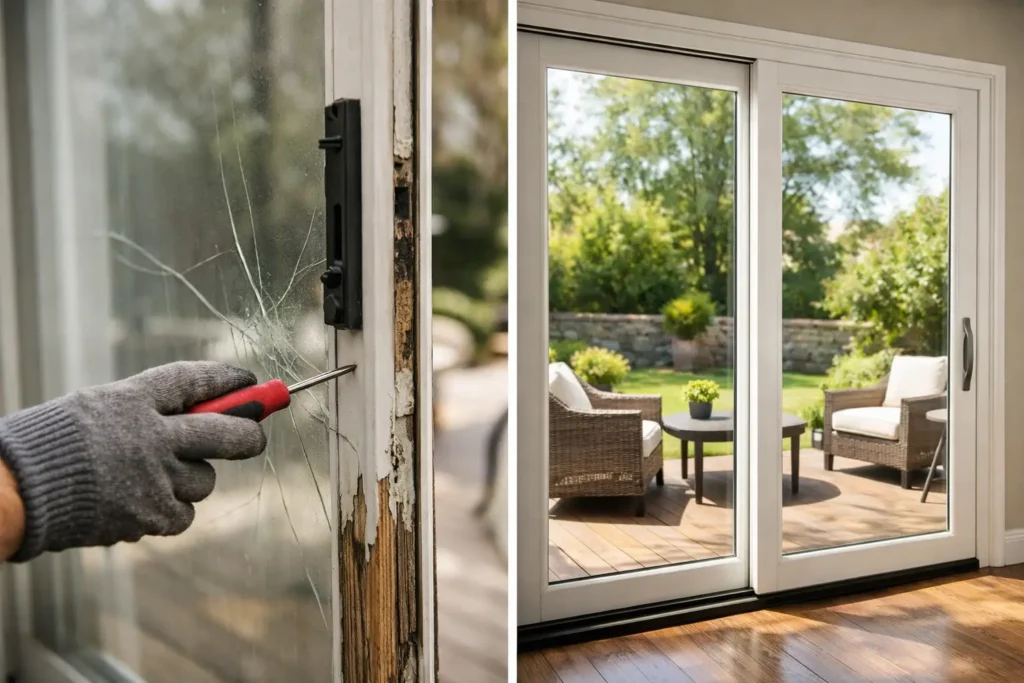
Repair or Replace Patio Doors? Know the Signs
A patio door that sticks, leaks, rattles, or no longer locks properly can make a room feel less secure and less comfortable. The question is whether to repair or replace patio doors before a manageable issue turns into higher energy bills, water damage, or an inconvenient failure. The right answer depends on the condition of the frame, glass, hardware, and opening – not simply the door’s age.
A qualified inspection can often save a door that still has good structure and character. In other cases, replacement is the more practical investment because repairs would only delay a larger problem. Knowing what separates the two helps homeowners make a clear, budget-conscious decision.
When Patio Door Repair Is the Smart Choice
Repair is often worthwhile when the door’s main frame is sound and the problem is isolated to a serviceable component. Sliding glass doors, French doors, and multi-panel patio systems all rely on parts that wear over time. Rollers flatten, tracks collect debris, weatherstripping compresses, handles loosen, and locks can stop engaging correctly. These issues can affect daily use without meaning the entire unit has failed.
A sliding patio door that requires a hard pull may need track cleaning, roller adjustment, or new rollers. If the door has sagged slightly, a professional can determine whether the issue is an adjustment, worn hardware, or a frame problem. Correcting the source matters. Simply forcing a misaligned door can damage the track, lock, and glass over time.
Glass problems can also be repairable. A cracked pane, broken tempered glass, or failed insulated glass unit may be replaced without removing the entire door, provided the sash and frame remain in good condition. If you see fogging or moisture between double-pane glass, the seal has likely failed. Replacing the insulated glass unit can restore clarity and improve comfort without the cost and disruption of a complete door replacement.
Weatherstripping and sweep replacement are smaller repairs with an outsized effect. Worn seals allow conditioned air, moisture, dust, and insects through gaps around the door. Replacing these components can reduce drafts and make the door close more securely. Screen repair or replacement is another practical service when the door itself works well but the screen has torn mesh, bent framing, or damaged rollers.
For homeowners with quality wood doors, restoration may be especially valuable. Localized rot, peeling finish, or damaged trim does not automatically require a new door. Skilled repair and refinishing can preserve the original look while addressing the areas most exposed to moisture and sun.
Signs You Should Replace Patio Doors
Replacement becomes the stronger option when there is structural damage, repeated water intrusion, widespread deterioration, or ongoing performance issues that a repair cannot reliably correct. A patio door should operate smoothly, close tightly, lock securely, and protect the opening from weather. When it cannot do those jobs, the cost of repeated repairs can exceed the value of a new system.
Start with the frame and sill. Soft wood, visible rot, corrosion, cracks, separation at joints, or water staining around the interior trim may indicate that moisture has moved beyond a simple seal problem. Water entering around a patio door can affect flooring, wall finishes, insulation, and framing. Addressing the door and the installation details early is far less disruptive than repairing concealed damage later.
Replacement also makes sense when the glass and frame are both outdated or inefficient. Older single-pane doors and poorly sealed units can create uncomfortable hot and cold zones near the opening. In Atlanta’s humid summers and variable winters, that loss of performance can be noticeable. A properly selected replacement door with insulated glass, dependable weather seals, and professional installation can improve comfort while reducing the strain on your heating and cooling system.
Security is another deciding factor. A loose frame, damaged locking stile, bent track, or lock that will not fully engage deserves prompt attention. Some hardware can be replaced, but a door with extensive damage around the lock area may not offer dependable protection even after a temporary repair. Newer patio door systems may also offer improved locking points, stronger frames, and better glass options.
Aesthetic goals can justify replacement, too, as long as the decision is honest about budget. If you are remodeling a room, opening up a view, changing from a sliding door to hinged French doors, or adding a larger multi-panel system, repair will not accomplish the design change. Replacement gives you the opportunity to update sightlines, finishes, hardware, screen options, and the way the door connects indoor and outdoor spaces.
Repair or Replace Patio Doors: Questions That Clarify the Decision
Before authorizing work, consider the condition of the full system rather than focusing only on the most visible symptom. A broken handle may be a straightforward repair. A broken handle combined with corroded tracks, cloudy glass, water damage, and a bowed frame points to replacement.
Ask how long the proposed repair should reasonably last. A good repair should restore reliable function, not simply make the door usable for a few weeks. If replacement parts are unavailable or the repair requires multiple compromises because the door is obsolete, a new unit may offer better long-term value.
Also consider how often the door has needed service. One roller replacement after years of use is normal maintenance. Repeated roller, lock, seal, and glass issues can mean the system has reached the end of its practical service life. This is particularly true when an older door has been exposed to direct weather or has experienced prior water leaks.
Finally, look at the surrounding opening. Patio door work is not only about the panel and glass. The sill, flashing, trim, flooring transition, and wall condition all matter. An experienced door professional evaluates the complete opening so repairs address the actual cause of the issue rather than covering it up.
What a Proper Patio Door Evaluation Should Include
A dependable assessment begins with operation. The door should slide or swing without dragging, rubbing, or binding. It should latch without being lifted or forced into place. The technician should inspect rollers, hinges, tracks, handles, locks, strikes, and the alignment of the active panel.
The glass should be checked for cracks, failed seals, loose stops, and signs of moisture between panes. The frame and sill should be examined for rot, corrosion, movement, and water-related damage. On exterior doors, the condition of weatherstripping and the seal between the door unit and the home also deserves close attention.
For replacement projects, measurements must be precise. A patio door opening is not a place for guesswork. Proper sizing, installation, insulation, flashing, and finishing protect the investment and help the new door perform as intended. The lowest initial price is rarely the best value if the work leaves gaps, poor drainage, or unfinished trim details.
Atlanta Window, Door & Glass approaches this choice with a repair-first mindset when the existing door has a sound foundation. Homeowners should be offered practical options, whether that means replacing glass or hardware, restoring a component, or installing a new patio door system when replacement is truly warranted.
Choosing a Replacement Door That Fits Your Home
If replacement is the right path, select a door based on how you use the space as well as appearance. Sliding doors are efficient in areas where a swinging panel would take up room. French doors provide a traditional look and a wider sense of entry. Folding and multi-slide systems can create a more open connection to a patio, deck, or pool area, but they require careful planning and a suitable opening.
Material affects maintenance, durability, and style. Vinyl can offer low maintenance and solid energy performance. Fiberglass is known for durability and stability. Aluminum is often a strong choice for slimmer profiles and contemporary glass-focused designs. Wood provides warmth and architectural character but needs consistent finishing and weather protection. The best material depends on exposure, budget, existing architecture, and maintenance expectations.
Do not overlook glass and screens. Insulated glass, low-emissivity coatings, impact considerations, privacy needs, and sun exposure all influence the best selection. A quality screen system matters in Georgia, where homeowners often want fresh air without inviting insects inside.
A patio door should not be a daily frustration or a source of hidden moisture. Have the opening evaluated while the issue is still contained, then choose the solution that gives your home dependable operation, secure closure, and a finished look you will be glad to live with every day.