
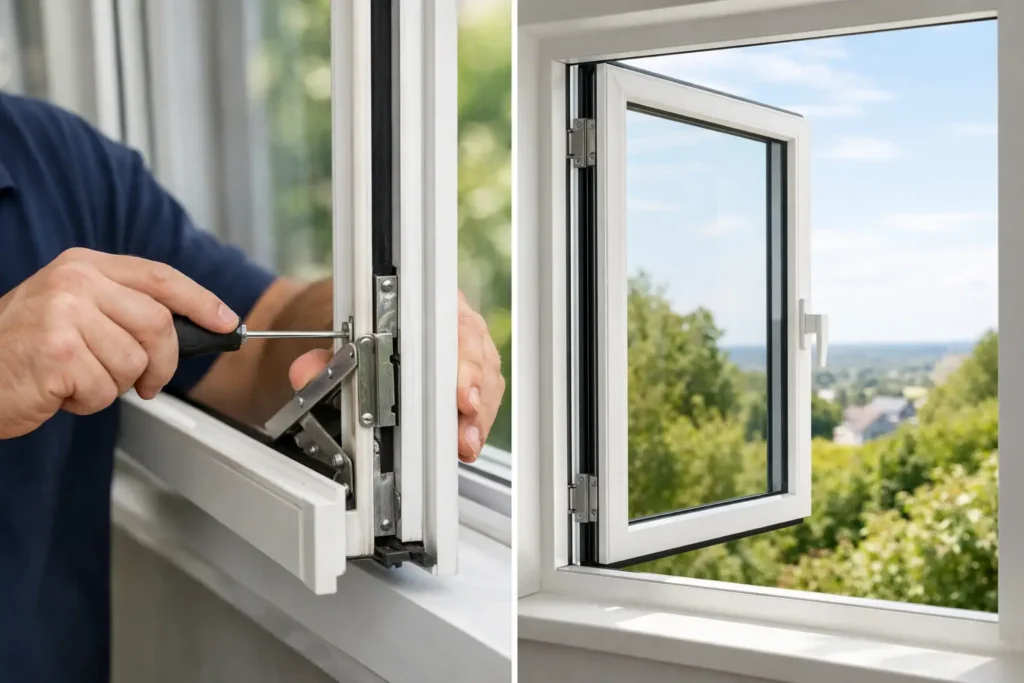
Casement Window Repair: Fix or Replace?
A casement window that will not close all the way usually gives you fair warning. You may notice the crank getting harder to turn, a draft near the sash, or water showing up where it should not. In many cases, casement window repair is the right answer – not a full replacement. The key is knowing whether the problem is isolated to hardware, seals, glass, or frame condition.
Casement windows do a lot of work. Their hinges, operators, locks, weatherstripping, and arms all need to stay aligned for the window to open smoothly and seal tightly. When one part wears out, the whole window can start acting older than it really is. That is why a careful repair approach often saves time, money, and unnecessary disruption.
What usually goes wrong with a casement window
Most casement window problems start with movement and exposure. These windows open outward, so the hardware carries more strain than a fixed window. Over time, operators strip out, hinge tracks collect debris, lock points shift, and weather exposure begins to wear down seals.
One of the most common calls is for a crank that spins but does not move the sash correctly. That can mean a worn operator, a disconnected arm, or damaged internal gears. Another common issue is a sash that binds at one corner or no longer pulls in tight when locked. Sometimes the cause is simple hardware wear. Other times, the sash or frame has shifted from age, moisture, or settlement.
Glass problems can also show up in casement units. If the insulated glass seal fails, you may see fogging between panes. If the glass is cracked but the frame is still sound, replacing the glass can be far more practical than replacing the entire window. Screens, locks, and handles are also frequent repair items, especially on older wood or aluminum units where parts have seen years of use.
Casement window repair vs. replacement
Not every failing window needs to come out of the wall. That is one of the biggest misunderstandings homeowners run into. Some contractors only want to sell replacement units, but that approach is not always necessary or cost-effective.
Casement window repair makes sense when the frame is structurally sound, the damage is limited, and the window can return to proper operation with new components or adjustments. If the issue is a failed operator, hinge, lock, weatherstrip, or insulated glass panel, repair is often the cleaner solution. It preserves trim, limits construction mess, and usually shortens the timeline.
Replacement becomes more likely when there is extensive wood rot, major frame distortion, chronic water intrusion, or multiple failures happening at once on a very old unit. If the window has already been patched several times and still leaks air or water, putting more money into it may not be the best long-term decision.
The real answer depends on condition, parts availability, and your goals. If you want to preserve the look of the home, match existing windows, or avoid opening up finished walls, repair can be the smarter path. If energy performance, style changes, or major deterioration are driving the project, replacement may be the better investment.
Signs your casement window can likely be repaired
A window does not have to work perfectly to be repairable. In fact, many service calls involve windows that are frustrating but still very salvageable. If the sash is intact, the frame is stable, and the issue is mechanical or localized, there is a good chance repair is possible.
A sticking window often points to alignment issues, dirty or worn hinge tracks, or a failing operator. Drafts may come from compressed weatherstripping, loose lock engagement, or a sash that no longer pulls in evenly. Water around the unit can come from failed sealant, drainage issues, or hardware that does not let the sash close tightly enough.
Even older windows can often be repaired if the right parts are available or compatible replacements can be fitted. This is where experience matters. A technician who understands window systems can usually tell the difference between a worn component and a window that has reached the end of its service life.
What a proper casement window repair should include
A good repair starts with diagnosis, not guessing. If someone replaces a crank without checking the hinge, track, sash alignment, and lock engagement, the new part may fail early or the original problem may stay in place.
A proper service visit should evaluate how the sash opens, whether it sits square in the frame, how tightly it locks, and whether the weatherseal is still doing its job. If the insulated glass is compromised, that should be identified separately from hardware issues. If the frame or sill has water damage, that affects whether repair is enough on its own.
For many windows, the repair may involve replacing the operator and arms, adjusting hinges, resetting the sash, replacing weatherstripping, and checking the lock for proper compression. For wood windows, some repairs may also include targeted restoration work if there is early-stage deterioration that can still be corrected. The goal is not just to make the window move again. The goal is to make it function correctly, seal well, and hold up over time.
Why parts and craftsmanship matter
Casement windows are not universal. Part sizes, track styles, handedness, and mounting locations vary widely by manufacturer and age. Trying to force the wrong operator or hinge into place can create more stress on the sash and shorten the life of the repair.
This is where trade knowledge makes a difference. Matching the right components, setting them correctly, and making the final adjustments takes more than basic handyman work. A window can appear fixed on day one and still perform poorly if the sash is not square or the lock points are not pulling the unit in evenly.
For homeowners, that means the cheapest repair is not always the best value. A careful repair may cost more upfront than a quick part swap, but it usually performs better and lasts longer. For builders and property managers, that reliability matters even more when one recurring issue can turn into multiple callbacks.
When older casement windows are worth saving
Many homes across Georgia have older wood or metal-clad windows with solid construction and attractive profiles that are worth preserving. If the frame is still sound, repairing the moving parts can extend the life of the window without changing the appearance of the home.
This is especially useful when you are trying to match existing units, maintain architectural character, or avoid a full replacement project across multiple openings. A selective repair strategy can address the windows that need immediate attention while buying time on others.
There are trade-offs, of course. Some older windows may never perform like a brand-new replacement unit in terms of energy efficiency. And if parts are obsolete, the repair may take more effort to source and fit correctly. But if the alternative is replacing a large number of windows just to solve a few failing components, repair is often the more practical move.
What homeowners should do before the problem gets worse
If your casement window is getting harder to open, do not keep forcing the crank. That often turns a manageable hardware issue into a larger failure. If you notice fogged glass, drafts, or water staining near the sill, it is best to have the window evaluated before surrounding materials are affected.
Routine care helps too. Tracks should stay clean, hardware should not be painted shut, and moisture issues around exterior trim should be addressed early. Small warning signs tend to stay small only if someone catches them in time.
For property owners who want options instead of a sales pitch, a repair-first company can be the difference between a targeted fix and an unnecessary full replacement. Atlanta Window, Door & Glass serves that practical need well by handling repair, restoration, parts, and replacement work under one roof.
Casement windows are built to ventilate well and seal tightly, but only when their parts are working together the way they should. If yours is sticking, leaking, or refusing to lock, the smartest next step is not to assume the whole unit is done for. A well-executed repair can restore performance, protect the opening, and give you more life from the window you already have.