
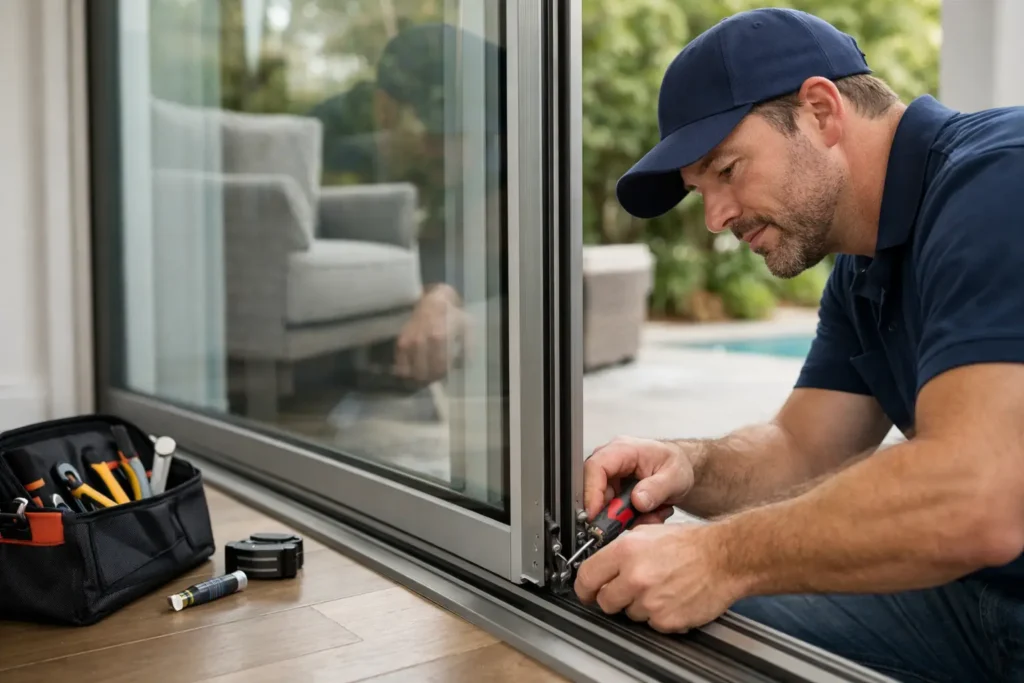
Sliding Glass Door Repair That Lasts
A sliding patio door usually gives you plenty of warning before it quits doing its job. It starts with a drag in the track, a handle that feels loose, a lock that needs a hard shove, or glass that fogs up and never clears. Sliding glass door repair is often the right answer at that stage, especially when the frame is still sound and the problem is limited to hardware, alignment, rollers, track wear, or glass.
For many homeowners, the biggest question is not whether the door has a problem. It is whether that problem calls for a repair, a restoration, or a full replacement. That decision matters because a good repair can restore smooth operation and security without turning a manageable service call into a larger construction project.
What usually goes wrong with a sliding patio door
Most sliding doors fail in predictable ways. The rollers wear down, collect debris, or go out of alignment. Once that happens, the panel stops gliding and starts grinding. Homeowners often assume the track is the main issue, but the track is sometimes just where the damage shows up first.
Locks and latches are another common trouble spot. If the panel no longer lines up correctly, the lock may not engage even though the hardware itself is still usable. In other cases, the latch mechanism is worn, the handle assembly is loose, or the keeper has shifted enough to affect security.
Glass can also be part of the problem. Cracked panes are obvious, but failed insulated glass is just as common in older doors. If you see condensation trapped between panes, the seal has likely failed. The door may still open, but energy performance and visibility suffer.
Weatherstripping tends to get overlooked until drafts, water intrusion, or outside noise become hard to ignore. A door that rattles in bad weather or leaks during heavy rain may not need to be replaced outright. It may need better sealing, adjustment, or component repair.
When sliding glass door repair makes sense
Repair is usually the smart first move when the core structure of the door is still in good condition. If the frame is stable, the opening is square, and there is no major rot, severe corrosion, or widespread structural damage, targeted repairs can go a long way.
That is especially true when the issue is isolated. Worn rollers, a bent track cap, broken handles, failed locks, damaged screens, and insulated glass replacement are all common service items. These repairs can improve day-to-day function without the cost and disruption of removing the entire unit.
There is also a practical budget case for repair. Not every door problem justifies a full upgrade, particularly if the home is being maintained, prepared for sale, or improved in phases. A well-executed repair buys performance and time. It also helps preserve trim, finishes, and surrounding materials that may not need to be disturbed.
When repair may not be enough
There are times when a repair becomes a short-term patch instead of a real solution. If the door frame is compromised, the sill has substantial damage, or the unit was poorly installed and has chronic alignment problems, replacing parts may only postpone a bigger issue.
It also depends on the age and quality of the existing door. Some older units have discontinued hardware, thin frames, or components that are no longer worth rebuilding. If the door has multiple failures at once, such as bad rollers, failed glass, damaged locks, and frame deterioration, a replacement may be more cost-effective over time.
That is where experience matters. A trustworthy contractor should be able to tell you whether the door can be repaired properly, restored in stages, or replaced for better long-term value. Pushing replacement on every service call is easy. Knowing when a repair is the better fit takes more judgment.
The most common sliding glass door repair services
Roller replacement is one of the most valuable repairs because it changes how the door feels immediately. A heavy patio panel that once required two hands can often be restored to smooth, controlled movement once the correct rollers are installed and adjusted.
Track repair matters too, but it should be handled carefully. A damaged track is not always solved by force or quick patching. In some cases, the right fix is cleaning and adjustment. In others, the track needs a cap, repair section, or more involved restoration so the new rollers are not damaged by the same rough surface.
Lock and handle repairs are often tied to alignment. If the panel is sagging or riding unevenly, installing new hardware alone may not solve the problem. The door has to meet the frame correctly for the lock to work as intended.
Glass replacement can restore appearance and efficiency when the rest of the door is still worth keeping. That includes replacing cracked glass or insulated glass with failed seals. For homes that need to maintain the existing frame and look, this can be a practical middle ground.
Screen door repair is another service homeowners appreciate because a damaged screen can make the whole opening less usable. Torn mesh, bent frames, or rollers that have worn out are often repairable without replacing the main patio door.
Why DIY fixes often fall short
A homeowner can clean a track, remove loose debris, and spot obvious damage. That basic maintenance helps. What usually does not help is guessing at the cause and replacing parts out of sequence.
Sliding doors are heavy, and the problems tend to overlap. A panel may drag because the rollers are shot, but it may also be out of adjustment or damaging the track as it moves. Installing the wrong roller assembly, overtightening adjustments, or forcing a misaligned panel can create a bigger repair than the one you started with.
Glass adds another level of risk. Once insulated glass, tempered panels, and seal performance are involved, precision matters. So does measuring. A slight error in sizing or installation can affect operation, weather resistance, and safety.
For commercial properties or large-format residential doors, the margin for error gets even smaller. Those systems often carry more weight, use specialized hardware, and need careful handling to avoid damage to the surrounding frame and finishes.
What to expect from a professional repair visit
A proper service call should start with diagnosis, not assumptions. The technician should inspect the rollers, track, frame condition, lock alignment, glass condition, and weather sealing before recommending a fix. If more than one issue is present, you should hear clearly what is urgent, what is optional, and what can wait.
Good repair work is also about fit and adjustment. Installing a new part is only half the job. The panel has to be aligned, tested, and fine-tuned so it moves smoothly and latches correctly. That attention to detail is what separates a temporary improvement from a repair that lasts.
Homeowners also benefit from honest options. In the Atlanta area, where heat, humidity, storms, and year-round use can put steady stress on exterior doors, it helps to work with a company that can repair, restore, or replace based on actual condition rather than a one-size-fits-all sales pitch.
How to help your door last longer after repair
Once the door is working correctly again, regular maintenance goes a long way. Keep the track clear of dirt and grit, especially after yard work or storms. Do not use the door as a barrier for moving heavy items, and do not ignore small signs of misalignment if the lock starts sticking again.
It is also wise to avoid harsh shortcuts. Thick grease in the track often attracts more debris than it solves. The better approach is proper cleaning, the right lubrication where needed, and occasional inspection of rollers, handles, and weatherstripping.
If your door serves as a main entry to a patio, deck, or backyard, frequent use will naturally wear moving parts faster. That does not mean the whole unit is failing. It just means the door benefits from periodic service before minor wear becomes damage.
A sliding patio door should move with control, close cleanly, and lock without a struggle. If yours no longer does those things, the best next step is not to force it for another season. It is to have the problem evaluated while repair is still a real option and not the part you wish you had done sooner.