
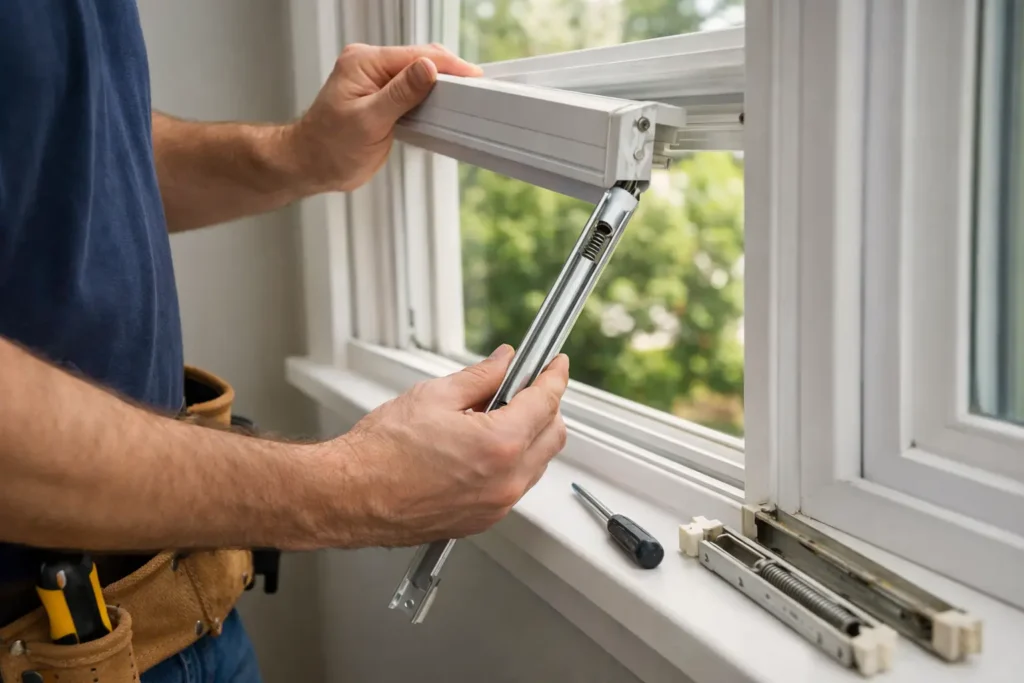
Double Hung Window Balance Replacement
A double hung window that drops shut, refuses to stay open, or feels heavy when you raise it usually is not worn out from top to bottom. More often, it needs a double hung window balance replacement. That small internal component does a big job – it supports the sash, keeps movement controlled, and helps the window operate the way it should.
For many homeowners, this is where the decision gets murky. If the window is sticking or slamming, is it a simple parts issue, or is it time for full replacement? The honest answer is that it depends on the age of the window, the condition of the frame, and whether the right balance can still be sourced. A good repair-first approach starts with the balance, because replacing a failed mechanism is often far more practical than replacing the entire window.
What a window balance actually does
Inside most double hung windows, the balances counter the weight of each sash. When they are working properly, the sash lifts with reasonable effort, stays where you place it, and closes without crashing down. When they fail, the window can become frustrating to use and, in some cases, unsafe.
Older wood windows may use weight-and-pulley systems, while many vinyl and aluminum units use channel balances, spiral balances, or block-and-tackle systems. The style matters because the repair method and replacement part must match the original setup. You cannot treat every double hung window the same way and expect a lasting result.
That is one reason balance work gets misdiagnosed. A homeowner may assume the whole window is bad when the real problem is a damaged pivot shoe, a stretched spring, a broken balance cord, or the wrong replacement part installed years ago. The opposite can happen too – someone replaces balances when the sash itself is warped or the frame is out of square.
Signs you may need double hung window balance replacement
The most common sign is a sash that will not stay open. You raise it a few inches, let go, and it slides right back down. That usually points to a failed balance that can no longer support the sash weight.
Another common symptom is a window that feels unusually heavy. If one side rises harder than the other, or the sash twists as it moves, one balance may be failing before the second one fully gives out. You may also hear scraping, popping, or clicking during operation. Those noises often mean internal components are worn or misaligned.
In some windows, the sash gets stuck in place or jumps out of track during tilt-in cleaning or routine use. That can indicate a balance issue, but it can also involve sash cams, pivot bars, or shoes. A proper inspection matters because replacing only one part in a worn assembly can leave you with the same problem a few months later.
Drafts and energy loss are a separate issue. A failed balance does not automatically mean the insulated glass or weatherstripping has failed. If the window still seals well and the frame is sound, balance replacement can restore function without unnecessary construction.
When repair makes sense and when it does not
If the window frame is solid, the glass is in good condition, and the sash is not badly damaged, balance replacement is often the smartest move. It restores usability, avoids the cost of a full new unit, and usually creates far less disruption inside the home.
This is especially true when the problem is isolated to one or two windows. Replacing entire windows because a few balances have worn out is often more expense than the situation calls for.
On the other hand, some windows have multiple failures at once. If the balances are bad, the seals are blown, the frame is deteriorated, and the sash no longer fits properly, repair may become a temporary fix rather than a good investment. In those cases, replacement can be the better long-term answer.
There is also the parts question. Some older or discontinued windows require very specific balances that are harder to match. Experienced repair professionals can often identify close replacements or source the right part by stamp number, size, and sash weight, but not every unit is easily serviceable.
Why exact matching matters
A balance is not a generic part you grab off a shelf and hope for the best. The length, spring strength, attachment style, and end fittings all need to line up with the window design. Even small differences can cause poor sash travel, uneven movement, or premature wear.
In channel balance systems, the stamped code usually helps determine the sash weight range. In spiral systems, tension matters just as much as physical fit. In block-and-tackle designs, the shoe and pivot bar condition can affect whether the new balance works correctly.
This is where craftsmanship shows up. A proper repair is not just swapping one component for another. It includes confirming the window is plumb enough to operate well, checking both sides for even performance, inspecting take-out clips or stops, and making sure the sash locks and aligns after reinstallation.
The challenge with DIY balance replacement
Some homeowners are comfortable tackling hardware repairs, and there are cases where a straightforward replacement can be done successfully. But balance systems can be surprisingly easy to mismeasure or reinstall incorrectly.
The biggest problem is identification. Two balances can look nearly identical and still have different load ratings or hardware ends. Ordering the wrong part wastes time and usually does not solve the problem. Another issue is tension. A spiral balance that is under-tensioned will not hold the sash, while one that is over-tensioned can make operation jerky and put stress on other components.
There is also the simple matter of access. Some windows require safe sash removal, stop removal, or disassembly that can damage the frame or vinyl track if done carelessly. On older painted wood windows, disturbing stops and parting beads can create extra finish work. On tilt windows, forcing the sash out at the wrong angle can damage the pivot bars.
For commercial properties or homes with multiple failing windows, professional service usually saves time and avoids repeat repairs. In the Atlanta area, where homes range from older wood units to newer vinyl window systems, correct part matching is often the difference between a lasting repair and a callback.
What to expect during a double hung window balance replacement
A proper service visit starts with diagnosis, not assumptions. The technician checks how the sash moves, confirms the balance type, measures the existing hardware, and looks for related wear in the shoes, pivots, tracks, and sash attachments.
If replacement is the right path, the sash is removed carefully, the failed balances are taken out, and matching parts are installed. In most cases, both balances on the affected sash should be replaced together. Replacing only one side can leave the window uneven and place extra stress on the older component.
After installation, the sash should be tested several times. It needs to move smoothly, stay open at different heights, tilt in properly if designed to do so, and close squarely. Good repair work is about function, but it is also about details. If the sash does not sit right after the repair, the job is not done.
Cost, value, and the bigger picture
Most homeowners ask the same question first – is this worth fixing? Often, yes. Double hung window balance replacement is usually far less expensive than full window replacement, especially when the glass, frame, and overall appearance of the unit are still in good shape.
The value is not just in saving money upfront. A repaired window is easier to use, safer for everyday operation, and less likely to be forced open or left shut because it is become a hassle. That matters in bedrooms, kitchens, and any space where ventilation counts.
Still, there are trade-offs. If several windows in the house have failing balances, fogged glass, damaged frames, and air leakage, you may be putting money into systems that are nearing the end of their service life. A trustworthy contractor should be willing to say that plainly. Repair-first service only works when the repair is genuinely the right answer.
Choosing the right help
Look for a company that handles repair, restoration, and replacement – not one that only sells new windows. That broader skill set usually leads to better recommendations because the goal is to solve the problem, not force one type of project.
Ask whether they identify the existing balance by code and measurement, whether they inspect related hardware, and whether they have experience with multiple window brands and older units. The right technician treats balance replacement as precision work, not a quick parts swap.
When a window starts slamming shut or refusing to stay open, the problem may be smaller than it looks. A well-executed repair can bring the sash back to smooth, dependable operation and buy years of additional use – which is exactly what practical window service should do.