
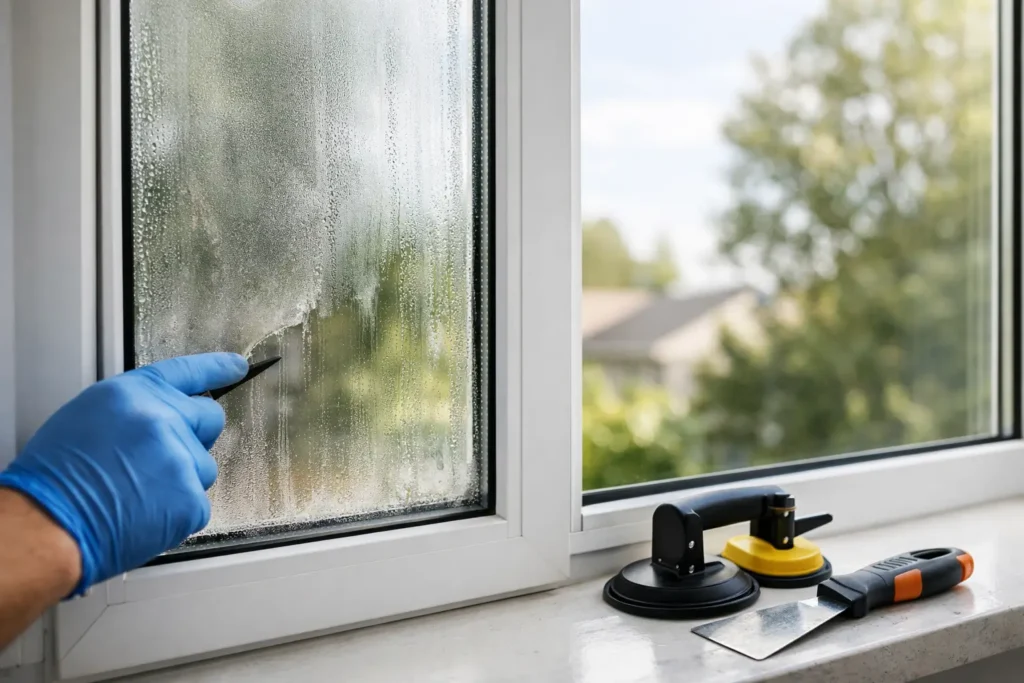
Can Broken Window Seals Be Repaired?
That cloudy film trapped between panes is usually the first sign homeowners notice, and it raises a fair question: can broken window seals be repaired, or is full window replacement the only real fix? The answer depends on what failed, how the window was built, and whether the frame and sash are still in good condition. In many cases, the seal itself is not repaired in place. The better solution is to replace the insulated glass unit while keeping the existing window frame if it is still sound.
This is where experience matters. A lot of homeowners are told they need an entirely new window when the actual problem is limited to the glass package. Other times, a simple glass swap is not enough because the frame, hardware, or operation of the window has already declined. The right recommendation comes from looking at the whole assembly, not just the fogging.
What a broken window seal actually means
Most modern double-pane and triple-pane windows use insulated glass units. These units are built with multiple panes of glass, a spacer between them, and a perimeter seal that helps keep insulating gas in and moisture out. When that seal fails, outside air and humidity can get into the space between the panes.
That is why you may see condensation, haze, or a milky appearance that you cannot wipe off from either side. It is not surface dirt. It is trapped inside the glass unit. Once that seal is broken, the insulating performance of the glass is reduced, and the view usually gets worse over time.
Seal failure does not always mean the entire window frame is bad. Wood, vinyl, aluminum, and composite frames can all outlast the insulated glass inside them. If the sash and frame are structurally solid, repairing the problem may mean replacing the failed glass unit rather than tearing out the whole window.
Can broken window seals be repaired, or does the glass need replacement?
In strict terms, a failed insulated glass seal is usually not repaired the way a loose latch or worn weatherstrip can be repaired. The original factory seal between panes cannot typically be restored to like-new performance while the glass remains in place. There are temporary services that try to defog the unit by venting moisture, but that does not truly rebuild the sealed insulated system.
For most homeowners, the practical repair is glass replacement. That means removing the failed insulated glass unit and installing a new one into the existing sash or frame when possible. This approach preserves more of the original window, reduces disruption, and often costs less than full-frame replacement.
That said, there are cases where full replacement is the better investment. If the frame is rotten, warped, leaking, difficult to operate, or outdated enough that several parts are failing at once, replacing only the glass may not solve the bigger problem.
Signs the seal has failed
Fogging between panes is the classic symptom, but it is not the only one. Some windows show water droplets between the glass during temperature swings. Others develop a permanent hazy cast or streaking that never clears. In some cases, you may also notice a drop in comfort near the window because the unit is not insulating as well as it once did.
Homeowners sometimes confuse seal failure with interior condensation. If moisture is forming on the room side of the glass, indoor humidity may be the issue. If the moisture or cloudiness is trapped inside the unit, the seal is much more likely to be the cause.
A professional inspection helps sort that out quickly. It also helps identify whether the problem is limited to one sash or part of a broader age-related decline in the window system.
When repair makes sense
If the frame is in good shape and the window still opens, closes, and locks properly, replacing the insulated glass unit is often the smart middle path. You solve the visibility issue, restore better thermal performance, and avoid the cost and mess of replacing the full window assembly.
This can be especially valuable in homes where the windows have custom sizes, matching grids, stained interior trim, or architectural details worth preserving. It can also make sense in commercial settings where maintaining a consistent exterior appearance matters.
Repair-first options are often overlooked because some companies focus mainly on new window sales. A more complete service approach looks at whether the existing unit can be restored through component replacement before recommending a larger project.
When replacement is the better call
There are times when asking can broken window seals be repaired leads to a different answer: yes, the glass issue can be addressed, but no, it is not the best long-term move. If your windows are drafty, hard to lock, showing frame damage, or nearing the end of their service life, replacing only the glass may be a short-lived fix.
Older wood windows with rot, vinyl frames with distortion, or windows with multiple broken parts can turn into repeat service calls. In those cases, full replacement may offer better performance, cleaner operation, and stronger value over time.
This is also true when several windows in the home are failing at once. If one insulated unit has lost its seal, the others of the same age and exposure may not be far behind. Sometimes a phased plan works best – repair the isolated failures now, then schedule replacements strategically instead of all at once.
What affects the cost
Cost depends on the size of the glass, the type of window, the thickness and configuration of the insulated unit, and whether there are specialty features such as grids, tint, tempered glass, or low-E coatings. Labor can also vary based on accessibility and the condition of the sash.
A straightforward insulated glass replacement is usually less expensive than full window replacement, but not every window is built for easy service. Some sashes allow for cleaner glass-only replacement than others. A good estimate should reflect the actual construction of your window, not a one-size-fits-all assumption.
The cheapest option is not always the most cost-effective. A temporary defogging treatment may cost less up front, but if it does not restore insulation and the cloudiness returns, you may end up paying twice.
Why seals fail in the first place
Time is the biggest factor. Insulated glass seals expand and contract with weather changes year after year. Sun exposure, temperature swings, and moisture all take a toll. In Georgia, long hot summers and strong UV exposure can accelerate wear, especially on elevations that take direct afternoon sun.
Installation quality matters too. If a window was installed out of square, exposed to excessive movement, or built with poor drainage around the opening, the glass unit can face extra stress. In some cases, manufacturing defects are part of the story. In others, the failure is simply age doing its work.
That is one reason a careful inspection is more useful than a guess. The visible symptom may be a failed seal, but the underlying cause could affect whether repair will hold up well.
What to expect from a professional assessment
A qualified technician should look at more than the fogged pane. The sash, frame condition, operation, weatherstripping, and surrounding trim all matter. If the insulated glass can be replaced cleanly, that option should be explained clearly. If the frame condition makes replacement the better route, that should be just as clear.
For homeowners, the value is in getting an honest recommendation instead of a sales script. Atlanta Window, Door & Glass works this way because many window problems do not require starting over. Sometimes they do. The point is to match the solution to the condition of the window and the goals for the property.
That practical approach helps homeowners control costs without sacrificing workmanship. It also helps builders and property managers decide where to preserve, where to upgrade, and where full replacement is justified.
Can you prevent future seal failure?
You cannot stop age entirely, but you can reduce avoidable stress on your windows. Keeping frames well maintained, addressing water intrusion early, and fixing operational issues before they worsen all help. If a window is sticking, racking, or taking on moisture around the frame, those conditions can contribute to premature wear.
It also helps to act early when you notice haze or moisture between panes. Waiting usually does not improve the situation. The longer the unit sits compromised, the more likely the appearance and efficiency will continue to decline.
If your window looks fogged between the panes, do not assume the whole thing has to go. Sometimes the right answer is replacement. Sometimes a targeted glass repair gets the job done with less disruption and better value. The key is having someone look at the full picture and recommend the work your window actually needs.