
Window Screen Repair Service Guide
A torn screen has a way of getting your attention at the worst time – when the weather is finally nice, the windows are open, and bugs start finding the gap before you do. A professional window screen repair service fixes that problem quickly, but the real value goes beyond patching mesh. Good screen work helps protect airflow, appearance, and the fit of the window itself.
For many homeowners, screens seem minor until they stop doing their job. A small tear becomes a larger rip. A bent frame no longer sits flush. A screen that keeps slipping out turns into a daily frustration. In commercial settings, damaged screens can also affect comfort, curb appeal, and how well a property is maintained. The right repair approach depends on the condition of the screen, the frame, and the window it belongs to.
When a window screen repair service makes sense
Not every damaged screen needs to be replaced. In many cases, repair is the smarter option, especially when the frame is still structurally sound. If the mesh is torn, loose, sun-damaged, or pulling away from the spline, a technician can often rescreen the existing frame and restore proper function without the cost of a full replacement.
That repair-first approach matters when you are trying to control costs and avoid unnecessary waste. It also matters when the screen belongs to an older window or a custom opening where a new screen may need to be specially built. Keeping the original frame, when possible, can save time and preserve a better fit.
There are also situations where repair is not the best long-term move. If the frame is badly warped, corners are separating, hardware is missing, or the screen no longer fits the opening correctly, replacement may be the more reliable option. An experienced service provider should be able to tell the difference and explain why.
Common screen problems and what causes them
Window screens take more abuse than most people realize. Pets claw at them. Kids push against them. Lawn equipment throws debris. Heat, humidity, and UV exposure wear down mesh and weaken frame components over time. In Georgia, that seasonal sun and moisture can speed up screen deterioration, especially on older homes.
The most common issue is torn mesh, but loose screening is just as common. When the material starts to sag, it loses tension and can make even a newer screen look worn out. Bent frames are another problem, often caused by improper handling or screens being removed and reinstalled repeatedly. Once a frame is out of square, the screen may rattle, leave gaps, or pop loose.
Then there are fit issues that point to a bigger problem. If a screen that used to fit well suddenly does not sit correctly, the trouble may not be the screen alone. The window frame, channel, clips, or surrounding components may also need attention. That is one reason a true window specialist brings more value than someone who only swaps mesh.
What to expect from professional window screen repair service
A quality service starts with inspection, not guesswork. The technician should check the mesh, frame, corners, spline, tabs, and fit within the opening. That assessment helps determine whether the screen can be repaired on site, taken in for rebuilding, or replaced entirely.
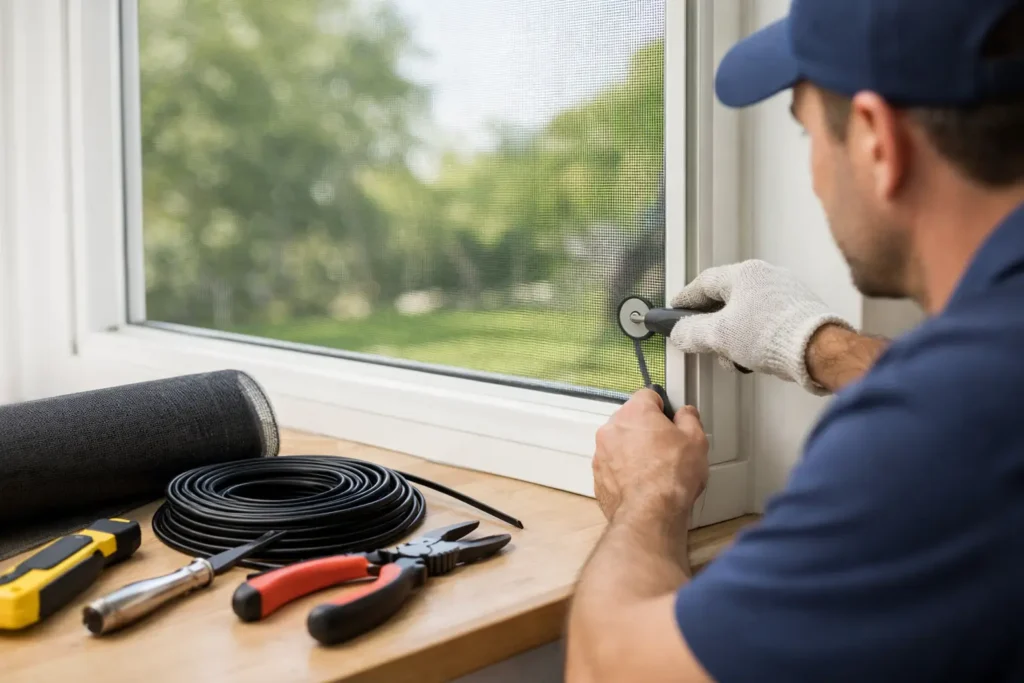
For straightforward rescreening, the process is usually efficient. The old mesh and spline are removed, the frame is cleaned and checked for damage, and new screen material is installed with the right tension. Too loose and it will sag. Too tight and the frame can bow. That balance is where craftsmanship matters.
Frame repair can be a little more involved. Bent aluminum may sometimes be straightened, but not always to a standard worth reinstalling. Broken corners and worn pull tabs may be replaceable, depending on the screen style. Custom or older screens often require a more careful approach because matching dimensions and hardware is not always simple.
The best result is not just a screen that looks new. It is a screen that fits correctly, operates easily, and holds up under regular use. That means paying attention to details that are easy to miss until the job is done poorly.
Repair vs. replacement: the real decision
Homeowners are often told to replace when repair would do the job. Other times, they spend money repairing a screen that should have been rebuilt from the start. The right answer depends on condition, age, and value.
If the frame is solid and the issue is limited to mesh damage, repair is usually the clear winner. It is cost-effective, fast, and less disruptive. If you have several screens with similar wear, rescreening can refresh the whole set and improve the look of the home without turning it into a larger project.
Replacement makes more sense when the frame has lost its shape, corrosion has set in, hardware cannot be matched, or the screen was never fitting properly in the first place. In some cases, replacement is also the better choice if you want to upgrade screen material for better durability, visibility, or insect protection.
A dependable contractor will not push one option every time. They will look at what can be saved, what should be rebuilt, and what will give you the best value over time. That practical flexibility is especially important when screen work is part of a larger window, door, or glass project.
Why screen repair is not always a DIY job
Some screen repairs look simple until the finished product goes back into the window crooked, loose, or bowed. DIY kits can work for small jobs, but they often lead to uneven tension, trimmed corners, damaged frames, or mesh that starts slipping after a short time.
The challenge is not just getting new screen material into a frame. It is getting the right material, the right spline size, and the right fit for the opening. Older or custom screens can be especially tricky. Even one slightly bent side can turn a basic repair into a screen that never sits right again.
There is also a bigger consideration. A technician who works with windows and doors regularly can spot related issues that a basic screen-only repair might miss. If the screen damage is tied to frame movement, worn tracks, hardware failure, or an installation issue, fixing only the mesh may not solve the problem for long.
Choosing the right window screen repair service
This is one of those jobs where experience shows up in the details. A good provider should be comfortable working with residential and commercial screens, older units, custom sizes, and repair-versus-replacement decisions. They should also communicate clearly about what can be fixed, what should be replaced, and how long the repair is likely to last.
Look for a company that treats screen work as part of the larger window system, not as an afterthought. That matters because screens interact with frame channels, stops, hardware, and operation. A provider with broader window and glass experience is often better equipped to deliver a repair that actually fits and functions the way it should.
Responsiveness matters too. A torn screen may not seem urgent until it affects ventilation, indoor comfort, or a tenant complaint. For busy homeowners and property managers, timely service and dependable follow-through are part of the value.
For clients across Atlanta Metro, that combination of craftsmanship and practical service makes a difference. Atlanta Window, Door & Glass approaches repair work with the same mindset applied to larger projects – fix what can be fixed, replace only when needed, and pay attention to the details that determine how the finished work performs.
Small repair, lasting impact
Window screens do a quiet job, but when they fail, you notice right away. They help keep fresh air comfortable, protect interiors from insects and debris, and finish the look of a window from both inside and out. A proper repair restores that function without unnecessary expense or disruption.
If your screens are torn, loose, bent, or no longer fitting the way they should, the smartest next step is not guessing whether they all need replacement. It is having them evaluated by someone who knows how to repair, restore, or rebuild the right way. A good screen should disappear into the window and simply do its job – and that is exactly the kind of detail worth getting right.