
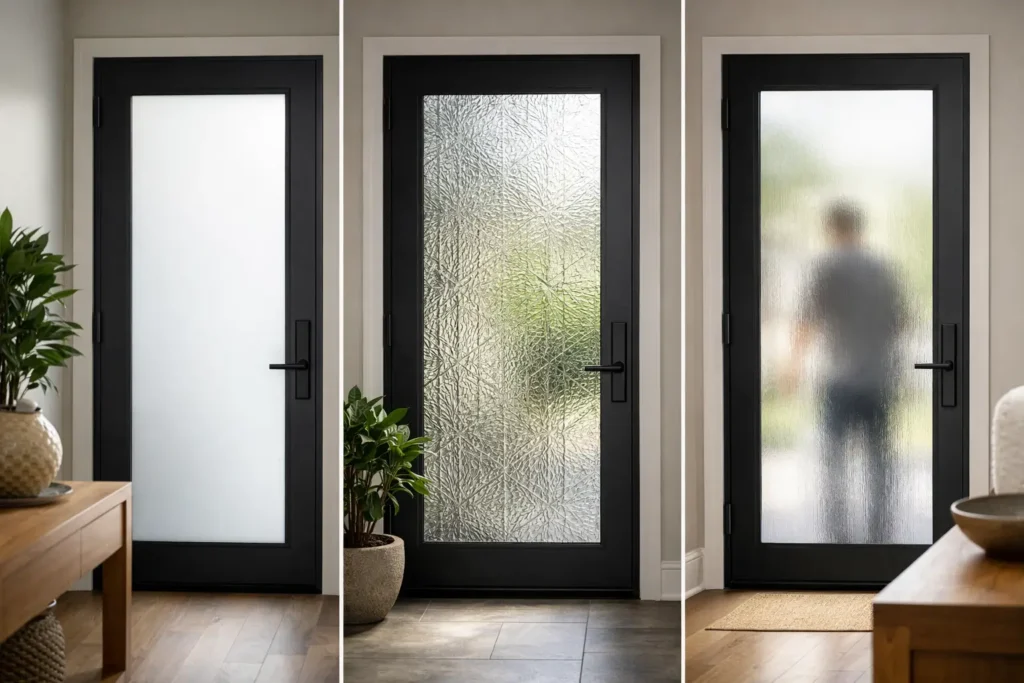
Privacy Glass Front Door: What to Choose
The front door does a lot of work in a home. It has to look right from the curb, hold up to daily use, and give you enough privacy that you are not putting your entryway on display every time someone walks up the drive. That is why a privacy glass front door is such a popular upgrade. It brings in natural light, makes the entry feel more open, and still protects the comfort of the people inside.
The key is choosing the right kind of privacy glass, not just choosing a door that happens to have glass in it. Some options soften visibility but still show movement and shadows. Others give you much stronger privacy, but they also change the look of the door and the amount of light that comes through. If you are replacing an aging entry door or updating the glass in an existing unit, those details matter.
Why homeowners choose a privacy glass front door
A solid front door gives privacy, but it can make an entry feel dark and closed off. Clear glass solves the light problem, but it creates another one. In many homes, especially those with a direct line from the entry into a living room or hallway, clear glass can feel too exposed.
A privacy glass front door strikes the middle ground. You get daylight at the entrance and a more welcoming appearance from the street, but you are not sacrificing security or comfort. For homeowners, that often means a better everyday experience. You can open the interior door, move around the foyer, or leave the hall lights on in the evening without feeling like your home is fully visible from outside.
This is also one of those upgrades that can improve both appearance and function at the same time. If your current door is dated, has failed glass, or no longer seals well, updating the entry can make the house look better and perform better in one project.
Privacy glass front door styles that actually work
Not all privacy glass is equal, and not every pattern fits every house. The best choice depends on how much privacy you want, how much light you need, and what style of home you have.
Frosted and acid-etched glass
This is one of the cleanest, most versatile choices. Frosted or acid-etched glass gives the door a modern, understated look and blocks direct views well. It still allows light through, but details on the other side are blurred.
For many homeowners, this is the safest option if privacy is the top concern. It works especially well on contemporary homes, updated traditional homes, and entry systems with sidelites where clear glass would feel too open.
Obscure textured glass
Textured glass comes in many patterns, from subtle pebbled finishes to deeper distortions. It offers privacy with more visual character than a plain frosted panel. Depending on the pattern, it can lean classic, decorative, or more transitional.
This is often a strong fit for homeowners who want privacy but do not want the flatter, more minimal look of etched glass. It can also hide fingerprints and dust a bit better than smoother surfaces.
Decorative and patterned glass
Some doors use privacy glass with built-in design elements such as caming, geometric layouts, or layered textures. These can give the front elevation more personality, especially on homes where the entry is a focal point.
The trade-off is that decorative glass tends to be more style-specific. A pattern that looks perfect on one house can feel out of place on another. It is worth thinking about the overall architecture, not just the glass sample by itself.
Reeded or rain glass
These options are popular when homeowners want strong privacy with a more distinct look. Reeded glass has linear texture, while rain glass gives the appearance of water running down the pane. Both obscure visibility well while still letting in light.
They can be a great fit for modern and transitional homes, though the final look depends on the door slab, frame color, and surrounding trim.
How much privacy do you really need?
This is where many decisions go sideways. Homeowners often choose glass based on appearance in a showroom, then realize later that the level of privacy is not what they expected once the door is installed and exposed to changing light.
During the day, privacy glass may perform one way. At night, with interior lights on and darkness outside, it may perform differently. Some obscure glasses still show outlines or movement. If your front door faces a busy street, sits close to a sidewalk, or opens directly into a main living area, that difference matters.
A good rule is simple. If you want light but do not want anyone seeing shapes clearly from outside, choose a higher-obscurity glass. If your entry is set back, covered, or buffered by landscaping, you may be comfortable with a lighter privacy pattern that lets in a bit more brightness.
Door material matters too
The glass gets most of the attention, but the door itself matters just as much. A privacy glass insert in the wrong door will still leave you with performance issues.
Fiberglass is a strong option for many homes because it is durable, stable, and low maintenance. It can handle heat and humidity well, which matters in Georgia. Steel doors offer security and value, though dents and finish wear can become concerns over time. Wood remains attractive and classic, but it usually requires more maintenance and is more sensitive to weather.
If the existing door frame is solid and the issue is mainly the glass, repair or glass replacement may be enough. If the slab is warped, the seals are failing, or the frame has structural wear, a full replacement may be the smarter long-term move. That repair-versus-replace decision should be based on condition, not pressure.
Energy efficiency and security
A front door with glass should not mean giving up performance. Modern insulated glass units can provide privacy while still helping with energy efficiency. Low-E coatings, insulated panes, and quality weatherstripping all make a difference.
Security is another common concern. Homeowners sometimes assume a solid door is automatically safer than one with glass, but quality construction matters more than appearance alone. A well-built entry system with proper locking hardware, strong frame installation, and durable glass performs far better than an aging door with weak hardware, even if that older door has no glass at all.
This is also why installation quality matters. Even a premium door can underperform if it is not fitted correctly, sealed properly, or aligned well in the opening.
Should you replace the whole door or just the glass?
It depends on what is actually failing. If you like the door, the frame is sound, and the only issue is dated or damaged glass, replacing the insert may be the most practical path. This can preserve the existing door while updating both privacy and appearance.
If the door drags, leaks air, has moisture between panes, or shows signs of age beyond the glass itself, replacing the complete unit may save money and frustration over time. A patchwork approach on a worn-out entry system can end up costing more if you still need a full replacement later.
This is where experienced evaluation matters. A good contractor should be able to tell you when repair is worthwhile and when replacement is the better investment. At Atlanta Window, Door & Glass, that practical approach is part of the value. Not every job needs a full new system, and not every older door is worth trying to save.
Cost expectations for a privacy glass front door
Pricing varies based on door material, glass type, size, hardware, and whether you are replacing glass only or the full unit. Decorative and custom privacy glass will cost more than standard obscure inserts. Larger entry systems with sidelites or transoms also push the price up.
Installation conditions affect cost too. If the opening is out of square, the trim needs repair, or the threshold area has water damage, labor can increase. That is not upselling. It is the difference between a door that looks good for a month and one that performs correctly for years.
For most homeowners, the better question is not just what the door costs, but what problem it solves. If the upgrade improves curb appeal, privacy, energy efficiency, and daily comfort, the value is easier to justify.
Choosing the right look for your home
The best front door should feel like it belongs on the house. A sleek frosted glass panel can look sharp on a modern facade but feel too plain on a more traditional brick home. A decorative leaded style may suit a classic entry beautifully but look busy on a simpler exterior.
Color, hardware, and surrounding trim all play a role. So do practical factors like how much sun hits the door and how exposed the entry is to weather. The right choice balances style with performance, not one at the expense of the other.
A privacy glass front door works best when it is chosen with the whole entry system in mind. Glass pattern, door material, installation quality, and condition of the opening all matter. Get those details right, and you end up with a front entry that feels brighter, looks sharper, and gives you the privacy you wanted in the first place. That is a worthwhile upgrade every time you come home.