
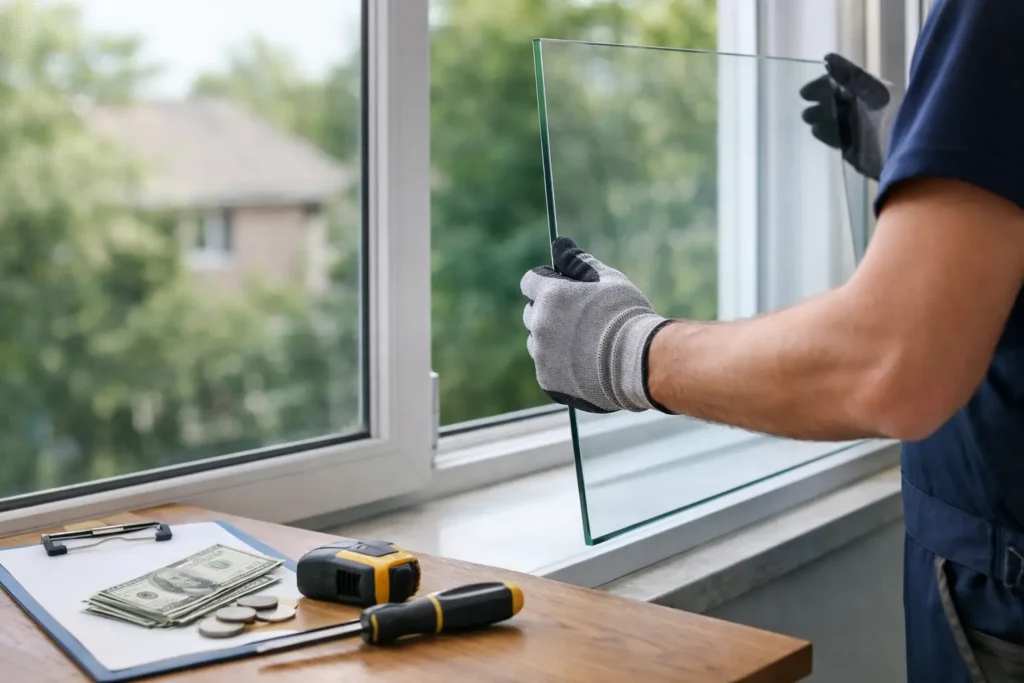
What Window Glass Replacement Cost Should You Expect?
A baseball through the living room window is an obvious reason to call for service. Fogging between panes, a spreading crack, or a draft that suddenly makes one room uncomfortable can be less obvious, but just as frustrating. Window glass replacement cost is not a one-price question because the glass is only part of the job. The window’s construction, the type of pane, the condition of the frame, and access to the opening all affect the final scope.
For many homeowners, replacing the glass instead of the entire window is the practical answer. It can preserve a sound frame, avoid unnecessary construction, and restore safety, clarity, and energy performance. The right decision starts with a close look at what failed and what can still be saved.
How Much Does Window Glass Replacement Cost?
A basic, accessible single-pane glass repair may cost a few hundred dollars, while insulated glass units, oversized panes, specialty safety glass, and difficult access and elevations requiting specialized equipment can move the price substantially higher. A realistic project range is often roughly $200 to $1,200 or more per opening, depending on the glass and labor involved.
That range is broad for a reason. Replacing a small piece of standard glass in a fixed window is very different from replacing a custom tempered, insulated unit in a second-story picture window. A dependable estimate should identify the glass type, measurements, labor, installation method, and any related repairs rather than offering one vague number.
The lowest quote is not always the best value. Improper sizing, weak seals, damaged stops, or rushed glazing can lead to drafts, water intrusion, rattling, and another repair sooner than expected. Good glass work is measured precisely and installed with close attention to fit, sealing, and finish.
What Drives Window Glass Replacement Cost?
The type of glass already in the window
Standard single-pane glass is generally the most straightforward material to replace. It is common in older homes, interior openings, some garage windows, and certain decorative applications. If the pane is a standard size and the surrounding sash is in good shape, this is often a focused repair.
Insulated glass units cost more because they contain two or more panes separated by a sealed airspace. These units may include Low-E coatings, argon gas, grids between the panes, tinting, or laminated construction. When the perimeter seal fails, moisture can enter and create the familiar cloudy or fogged appearance. Cleaning the surface will not correct a failed seal inside the unit. The glass assembly must be replaced.
Safety requirements also matter. Tempered glass is designed to break into small pieces and is commonly required near doors, in bathrooms, and in other impact-prone locations. Laminated glass, often used for enhanced security or noise reduction, has an interlayer that holds fragments together. Both are specialty products that typically require custom ordering.
Size, shape, and custom fabrication
A small rectangular pane is usually less expensive to fabricate and handle than a large, heavy unit. Picture windows, transoms, sidelites, and oversized doors can require additional labor simply because moving and setting the glass safely takes more planning.
Custom shapes add another layer of cost. Arched, circular, angled, or divided-light glass must be measured carefully and fabricated for the opening. Decorative patterns, obscure bathroom glass, stained glass, and specialty finishes can also extend lead times and raise material costs. These details may be worth preserving, especially in a distinctive home, but they should be considered during the estimate rather than treated as an afterthought.
The condition of the sash and frame
Glass replacement makes the most sense when the sash, frame, and operating hardware remain structurally sound. Wood windows may need glazing compound, stops, or localized rot repair before new glass can be installed correctly. Vinyl windows with cracked welds or warped frames may not hold a new insulated unit reliably. Aluminum frames can have worn gaskets, damaged channels, or corrosion that needs attention.
This is where a repair-first approach protects your budget. If the surrounding window can be restored, there is little reason to replace the complete unit solely because one pane has failed. On the other hand, placing new glass into a deteriorated sash can be short-lived and may not solve water or air leaks. A qualified inspection should separate a glass problem from a whole-window problem.
Access, location, and installation complexity
Ground-floor windows with clear access are usually the simplest to service. Second-story openings, stairwell windows, glass above a roofline, and units behind landscaping or built-in features require more time and safety planning. In some cases, additional equipment or a second technician is necessary to safely remove and install a large pane.
Commercial storefront glass and door glass can have their own requirements. Business owners may need work scheduled around operating hours, temporary security measures, specialty framing systems, or code-compliant safety glass. The material may look simple from a distance, but the installation details matter.
Emergency service and related repairs
A broken window can leave a home exposed to weather, insects, and security concerns. Emergency board-up or temporary protection is often the right first step when custom replacement glass is not immediately available. That service, along with after-hours scheduling, can affect the overall cost, but it prevents a broken opening from becoming a larger property issue.
Related work can also appear on an estimate. Screens, window stops, weatherstripping, grids, trim, locks, or hardware may need repair during the same visit. Addressing these items together can be efficient when they directly affect the window’s performance.
When Glass Replacement Makes More Sense Than a New Window
Replacing only the glass is often a smart choice when one insulated unit has fogged, a pane is cracked, or accidental damage is limited to the glass. It is particularly worthwhile when the window opens and closes properly, the frame is square, there are no signs of rot or water damage, and the surrounding windows still meet your comfort and appearance goals.
It can also be the better option for homeowners who want to preserve original wood windows, custom millwork, or a matched exterior appearance. A full replacement may require new trim work, paint, siding adjustments, or interior finishing. Glass-only repair is usually less disruptive when the existing window assembly is worth keeping.
Full window replacement deserves consideration when multiple panes have failed, frames are decaying or warped, hardware is unreliable, or the window is consistently leaking air and water. If several windows are near the end of their service life, a larger replacement plan may provide stronger long-term value than repeated individual repairs. The decision is not about pushing the biggest project. It is about investing in work that will hold up.
What a Clear Estimate Should Include
Before approving work, ask whether the quote covers removal and disposal of broken glass, custom measuring, glass fabrication, installation, sealing, and cleanup. For insulated units, confirm whether the replacement will match the existing glass features, including tint, grids, coatings, and safety requirements. A mismatch can be noticeable from both inside and outside the home.
It is also reasonable to ask what the technician found around the opening. If a sash, frame, seal, or stop needs repair, you should understand why it is needed and whether it is essential now or can be planned later. Clear communication helps homeowners compare options without guessing what has been left out.
For Atlanta-area homes, climate is another useful part of the conversation. Summer heat, humidity, and strong sun exposure can make energy-efficient insulated glass and proper perimeter sealing especially valuable. The best choice may not be the most elaborate glass package, but it should suit the room, exposure, and condition of the existing window.
How to Avoid Surprises Before Service Begins
Take photos of the damage and note whether the glass is cracked, loose, fogged, or broken completely out. Check for labels or etched markings in the corner of the pane, as these can help identify safety glass or insulated glass features. Do not remove broken glass yourself unless you can do so safely. Keep children and pets away from the area, and use temporary protection if the opening is exposed.
When requesting an estimate, mention the window location, approximate size, floor level, and whether the pane is fixed or part of an operable sash. These details help set expectations before an on-site measurement. Final measurements should still be taken by a professional, especially for insulated, tempered, or custom-shaped glass.
A well-executed glass replacement should do more than make the break disappear. It should restore the window’s fit, safety, weather resistance, and appearance without creating unnecessary disruption. If you are weighing repair against replacement, start with an honest assessment of the whole opening. The best solution is the one that protects your home and respects your budget for years to come.