
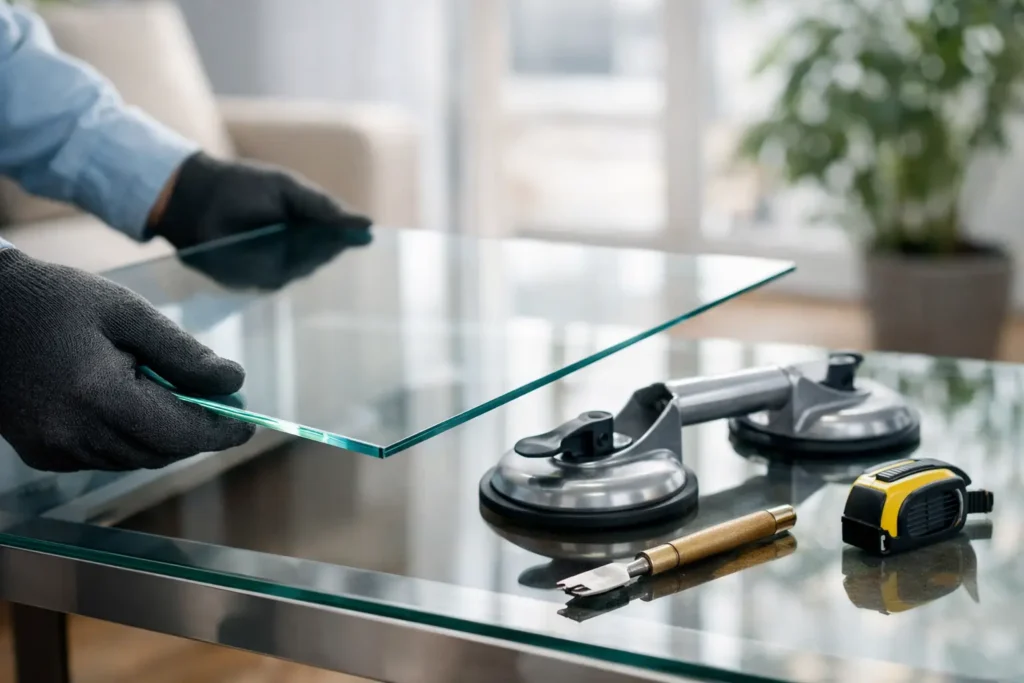
Custom Glass Table Top Replacement Guide
A chipped corner on a dining table or a cracked glass insert on a patio set usually starts the same way – you notice it once, then you see it every time you walk by. At that point, custom glass table top replacement is not just about appearance. It is about safety, fit, and protecting the furniture you already own.
For many homeowners, the real question is not whether the glass needs attention. It is whether the table should be repaired, restored, or fully replaced. That depends on the type of damage, the condition of the base, and how exact the replacement needs to be. A good glass shop should help you sort that out instead of pushing a one-size-fits-all answer.
When custom glass table top replacement makes sense
Replacement is often the right move when the glass is cracked, deeply scratched, badly chipped, or no longer sits securely on the base. Small surface wear can sometimes be tolerated, especially on side tables or decorative pieces, but structural damage is different. Once the integrity of the glass is compromised, the risk goes up quickly.
Custom work also becomes necessary when the table is not a standard size. Many dining tables, conference tables, antique pieces, and specialty furniture use unique dimensions, shaped corners, radius cuts, or center openings for umbrellas. In those cases, off-the-shelf glass rarely fits correctly, and a poor fit can create stress points, wobble, or an unfinished look.
There is also the design side of the decision. Sometimes the old glass is intact, but the thickness looks too light for the base, the edge profile feels dated, or the top no longer matches the room after a remodel. Replacing the glass can update the furniture without replacing the entire piece.
Repair, restore, or replace?
This is where experience matters. Not every table needs a full reset. If the issue is loose bumpers, worn pads, minor hardware problems, or instability in the frame, the glass may be fine and the base may be the real problem. On the other hand, if the pane is damaged or the dimensions were wrong from the start, replacement is the cleaner and safer long-term fix.
Older furniture often deserves a closer look before any decision is made. A solid wood or wrought iron base may have years of life left in it, even if the top does not. For homeowners who want to preserve a favorite piece, custom replacement can be the practical middle ground between living with damaged glass and buying all new furniture.
What to measure for a custom glass table top replacement
Accurate measurement is the difference between a professional result and a frustrating one. Length and width are the basics, but they are not the whole story. Shape, corner style, edge finish, thickness, and how the glass rests on the base all matter.
If the table is round, oval, racetrack, or has clipped corners, those details need to be measured precisely. If the glass sits inside a frame, the sizing needs to account for clearance so it does not bind. If it rests on top of a pedestal or legs with spacers, the overhang should be intentional and balanced. Patio tables may also require a center hole for an umbrella, and the placement has to be exact.
When the original glass is still available, it can sometimes be used as a pattern. If it is shattered or missing, field measurement becomes even more important. Guesswork is where custom jobs go wrong.
Choosing the right glass thickness
Thickness affects both strength and appearance. A thin piece of glass on a large dining table can look underbuilt, even if it technically spans the surface. A thicker top has more visual weight and usually performs better on larger tables or heavy-use surfaces.
The right choice depends on span, support, and use. A fully supported inset top may allow for a different thickness than a glass top resting on a few contact points. A decorative cover over wood has different demands than a standalone glass dining surface. This is one of those situations where it depends on how the table is built, not just how big it is.
Tempered glass is often the preferred option for table tops because it is designed for safety. If it does break, it shatters into small pieces rather than dangerous sharp shards. That matters in family homes, commercial spaces, and any area where the table sees regular use. There are situations where other glass types may be considered, but for many applications, tempered glass is the practical standard.
Edge styles and finish details matter
A quality custom glass table top replacement should feel finished, not merely cut to size. Edgework has a big effect on that. A polished edge gives the glass a clean, refined look and is typically the right choice when the edge will be visible. Seamed edges are more basic and may be acceptable where the glass sits in a frame and the perimeter is mostly concealed.
Corner treatment matters too. Sharp corners can be appropriate for some modern designs, but many homeowners prefer eased or rounded corners for comfort and safety. That is especially true on coffee tables, breakfast tables, and homes with children.
Tint, clarity, and finish also come into play. Clear glass remains the most common option because it keeps the furniture and room visually open. Frosted or tinted glass can work well in some designs, but it changes the look more dramatically. The right choice depends on whether you want the glass to disappear or become part of the design statement.
Custom glass table top replacement for indoor and outdoor tables
Indoor and outdoor applications are similar in concept, but they do not perform the same way. Outdoor tables deal with direct sun, moisture, dirt, shifting temperatures, and heavier seasonal use. A patio table top needs to be measured and fabricated with those conditions in mind.
That is also why replacement should include a look at the base, supports, and contact points. If the frame is rusted, bent, or uneven, a new pane alone will not solve the problem. The glass may fit perfectly and still feel unstable if the structure underneath is failing. A proper assessment helps avoid replacing the top only to discover the table itself needs restoration work.
For indoor tables, visual fit tends to drive more of the decision. Homeowners often want a replacement that matches surrounding finishes, preserves a favorite base, or protects wood furniture from wear. In those cases, craftsmanship shows in the small things – clean polish, precise sizing, and a top that sits exactly as it should.
What a professional fit should look like
A properly made replacement should sit flat, align evenly, and feel intentional from every angle. It should not rock, overhang unevenly, pinch inside a frame, or expose rough finishing. Those details are easy to overlook in photos and impossible to ignore in person.
This is one reason many homeowners and property managers prefer working with an experienced local glass company instead of ordering a generic piece and hoping it works. Companies like Atlanta Window, Door & Glass understand that precision matters long after installation day. The goal is not just to supply glass. It is to make the finished table feel whole again.
Turnaround also matters. A broken dining table, conference table, or patio set can interrupt daily use. Fast service is valuable, but speed should not come at the expense of measurement, tempering, or finish quality. The best result comes from getting both right.
Cost depends on more than size
People often assume price is based only on dimensions, but several factors shape the final cost. Thickness, tempering, edge polish, shape complexity, cutouts, corner finishing, and installation requirements all affect the scope of the job.
That is why the cheapest option is not always the most economical one. Glass that is cut inaccurately, finished poorly, or chosen at the wrong thickness may need to be redone. A well-fitted replacement usually lasts longer, looks better, and avoids the frustration of trying to force a standard piece into a custom setting.
If budget is a concern, be direct about it. A good service provider can often explain where to prioritize and where to simplify. Sometimes that means choosing a straightforward edge profile. Other times it means preserving the existing base and investing only in the new top. Practical guidance is part of the service.
A better result starts with the right assessment
The best custom glass table top replacement jobs begin with a simple question: what does the table need to function well and look right again? Sometimes the answer is a new tempered top with polished edges. Sometimes it includes base repair, new pads, or careful measuring for a nonstandard shape. The right path depends on the table, the room, and how you use it.
When the work is done correctly, the replacement should not feel like a compromise. It should feel like the table was built that way from the start. If you are dealing with damaged, outdated, or missing glass, the smartest next step is to get an expert opinion before a small issue turns into a bigger one.